
Food waste is uneaten food and inedible parts that is sent to these eight locations: composting, anaerobic digestion, landfill, combustion, sewer, dumping, spread onto land, or not harvested (defined by the nonprofit, ReFed). Food waste contributes to food insecurity and negatively impacts the environment. In this blog post, I am going to tell you food waste facts, and the solutions offered. Food waste is solvable and these resolutions are accessible.
38% of all food goes unsold or uneaten
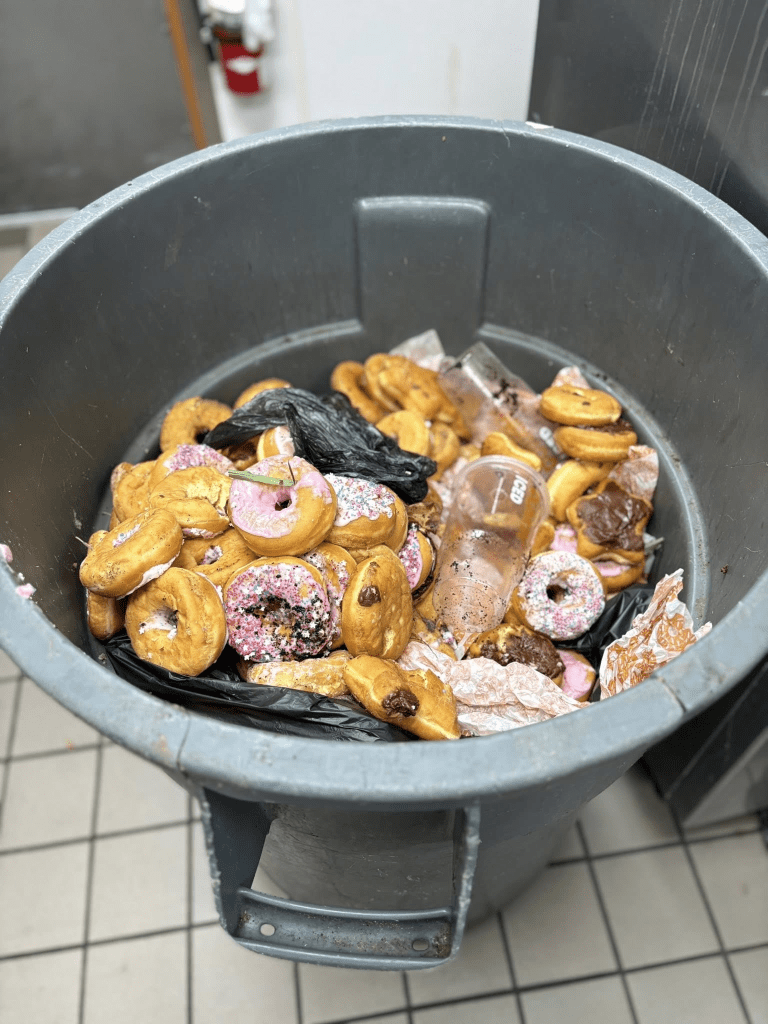
From Feeding America, 38% is a lot. That is over a third of the food supply. I have worked at restaurants and grocery stores, and I have seen a lot of thrown away perfectly fine food. There is a part of corporate leadership that prohibits employees from eating leftover food. It feels unnatural to not feed your employees.
From a PR lens, your employees are your number one stakeholders, so the concept of not allowing employees to take home leftover food at the end of the day has never made sense to me.
Obviously there are safety regulations that do matter, but why does Dunkin’ make so many donuts, just to throw them away at the end of the day. One in Seven Americans are hungry. Not allowing your employees to take home some donuts seems inhumane at this point.
In the US, consumers waste more food in homes than any sector of the food supply chain each year
From ReFED, consumers leave the largest impact on food waste. This fact may be surprising, but it makes a lot of sense. When thinking back on the definition of food waste provided in the beginning, it includes the unfinished meal you threw away.
The first solution is the easiest. Buy less. Smaller portions greatly contribute to food waste. This is an applicable solution at both home and in restaurants. At home, meal planning is a great way to start, and then further adding more preventive methods to your routines. In restaurants, offering to-go boxes and making free food by request are two solutions that ReFed also offered.

We need more educational campaigns
Uneaten food that ends up in landfills makes up 8% of global carbon emissions. The environmental impact of food waste is dangerous and threatens our planet. Food production is a very hard process and it is sad to see it go to waste. Mass educational campaigns explaining the dangers of food waste can effectively teach Americans.
FlashFood is an app that partners with retailers to help consumers save money on groceries, while also preventing food waste. Food waste and food insecurity are both intertwined, which is why I like their campaign/mission so much. Flashfood has also already made a positive impact with retailers, ensuring customer loyalty and shrink reduction.
In conclusion, food waste is a serious issue that means a lot to me. It will not be the first time I write about it on this blog, my next post is also dedicated to food waste. You can start making an impact today by just thinking a little harder when making your grocery list.
 food rage
Leave a comment